
Krabi in November: Weather, Crowds & When to Visit
By the Thongyib Thongyod team · Updated 3 September 2026
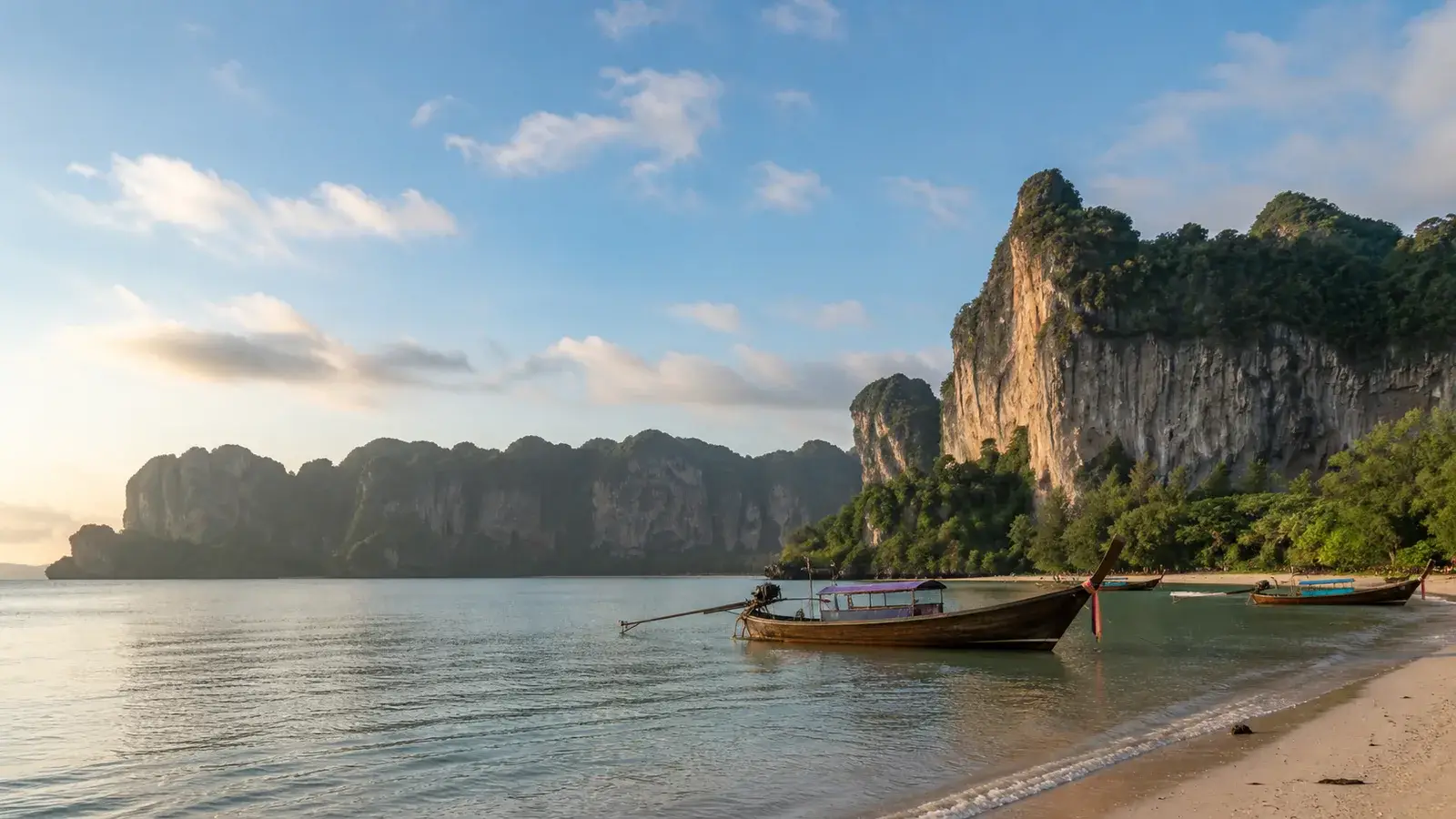
Krabi in November is the handover month. The southwest monsoon begins to loosen its grip, island schedules return to normal, and the coast is still intensely green from months of rain. Early November can be wet and unpredictable; late November often feels like the opening chapter of high season—calmer sea, clearer mornings and more people arriving every day.
If you can choose freely, the second half of November is the sweet spot. You get much of December’s weather without the Christmas crowd or its prices. If your dates fall in the first week, plan more like a green-season traveller: keep one spare day, book boats locally and have a road-based alternative ready.
November in short:
- Early month: transitional, greener, quieter and more likely to bring rain
- Late month: increasingly dry, calmer sea and fuller island schedules
- Daytime temperatures around 31°C; sea remains warm
- Better value than the late-December and January peak
- One of the best months for balancing scenery, weather and crowds
Early November versus late November
The difference matters more than the monthly average suggests. Weather does not flip on 1 November. During the first week or two, Ao Nang may still get the heavy showers, grey spells and rough-water days associated with October. Hotels are quiet, deals are easy to find and the landscape looks freshly washed—but a rigid island itinerary is still a gamble.
By the second half, mornings are more consistently bright and longtail crossings more comfortable. Tour desks grow busier, beach restaurants fill again and accommodation prices begin their climb toward Christmas. You are trading a little space and value for better odds on the water.
For couples or families with only three nights, choose late November. With five to seven nights and a flexible temperament, early November can be excellent.
What happens to island tours?
Most island operators are active throughout November, but the sea still gets the final vote. The close Ao Nang–Railay crossing usually runs whenever conditions are reasonable. Longer trips to Phi Phi or Hong Islands are more exposed to swell and deserve a spare day in your plan.
In early November, book after you arrive and ask about refund or rescheduling policies. Later in the month, availability begins to matter again, so booking a day or two ahead is sensible. National-park fees are often separate from the advertised tour price; confirm before paying.
Crowds and prices
November sits between low-season bargains and peak-season certainty. Rooms generally cost more than September or October but less than the Christmas-to-February high. The sharpest change happens late in the month as European winter travel begins.
Ao Nang Beach becomes lively without yet feeling overwhelmed. Nopparat Thara remains the quieter choice, especially on weekdays, and the Ao Nang Landmark Night Market has enough visitors for its full food-stall energy without the densest holiday crowds.
Book ahead if you want a specific small hotel or Railay property. Otherwise November still allows more spontaneity than January.
What to do in November
Make the sea your first priority on clear days. Railay, the 4 Islands and Hong Islands benefit most from the improving conditions. Start early; even before peak season, famous beaches feel different before the tour boats arrive.
Keep one inland day for Tiger Cave Temple, the Emerald Pool and Hot Springs, or Krabi Town. Trails can remain slippery after overnight rain, so proper shoes still matter. For a gentler day, walk Nopparat Thara at low tide, have a long lunch and stay for sunset.
November also commonly brings Loy Krathong, the full-moon festival when candlelit banana-leaf floats are placed on water. The exact date changes with the lunar calendar, so check the year you travel rather than trusting an old blog post. Celebrations vary, but beaches, temples and community spaces around Krabi take part.
Where to stay
Central Ao Nang is easiest for a short first visit: tour desks, longtail tickets, restaurants and transport are close together. Khlong Haeng and Nopparat Thara suit families and longer stays—quieter evenings, more space and easy access to the night market. Railay delivers the scenery but costs more and depends entirely on boats.
Our detailed Ao Nang neighbourhood guide covers the trade-offs. In early November, road-connected Ao Nang is the safer choice. In late November, Railay becomes easier to recommend as sea conditions settle.
What to pack
- Light rain protection, particularly in early November
- Dry bag for longtail spray even on blue-sky days
- Breathable clothing and serious sunscreen
- Shoes with grip for viewpoints or wet temple steps
- A light layer for vans, malls and strong air-conditioning
- Cash in small notes for boats, markets and local transport
Is November the best month for Krabi?
For many travellers, yes—particularly the final two weeks. January and February offer slightly better weather certainty, but they also bring the highest demand. September and October are cheaper, but require more flexibility. November sits in the middle: green landscapes, improving seas, reasonable availability and a coastline waking up rather than running at full capacity.
Thongyib Thongyod publishes daily hours of 8:00–18:00 at Ao Nang Landmark in Khlong Haeng, near Nopparat Thara Beach. The current menu lists breakfast choices, coffee and the golden Thai desserts the cafe is named after; compare the hours with any confirmed boat schedule and check item availability. Browse the menu or find us.