
Krabi in September: Weather, Boats & Honest Local Advice
By the Thongyib Thongyod team · Updated 3 September 2026
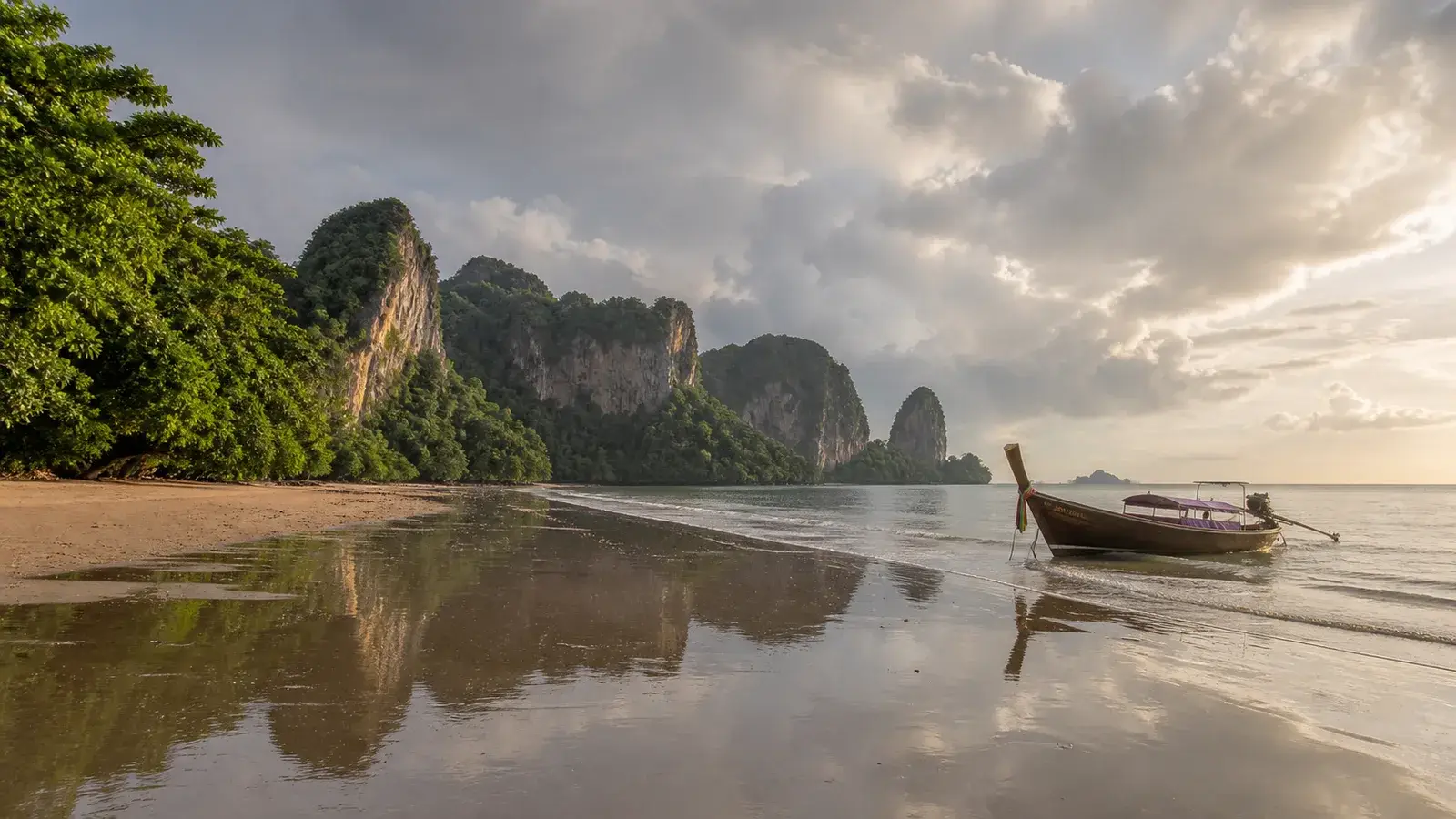
Krabi in September is a trade: you give up weather certainty and get the province at its greenest, quietest and often cheapest. Daytime temperatures sit around 31°C, the sea remains warm, and long-term rainfall averages roughly 275 mm for the month. That rain does not arrive on a timetable. A morning can be blue and still, an afternoon can disappear behind a wall of water, and a slow monsoon system can occasionally turn the whole day grey.
Do not assume September rain always lasts only an hour; some days stay wet. A flexible four- or five-night visit gives you more room to move boat days, and accommodation with comfortable wet-weather options reduces the dependence on one perfect Phi Phi forecast.
September in short:
- Around 31°C by day, with warm sea and high humidity
- One of the wettest months, averaging roughly 275 mm of rain
- Hotel rates commonly sit well below December–February prices
- Island tours operate when seas allow, but cancellations are a real possibility
- Ao Nang is a more practical wet-weather base than boat-only Railay
- Best for flexible travellers; wrong for anyone who needs guaranteed beach days
What is the weather actually like?
Forecast apps make September look worse than it often feels. A thunderstorm icon usually means rain is possible somewhere in the district, not that your beach will be wet from breakfast to dinner. Heat builds over the Andaman Sea, clouds gather around the limestone hills, and rain often falls hard rather than politely. Streets can flood briefly, then drain as quickly as the shower arrived.
But averages are not reassurance. September can also produce two or three rough days together, especially when a broad weather system moves across the coast. Treat a seven-day forecast as a signal, not a schedule; marine conditions matter more than the little rain percentage when boats are involved.
The useful rhythm is to front-load the day. Beaches, viewpoints and boat departures belong in the morning. Keep massage, cafés, shopping, cooking classes and Krabi Town for the afternoon. Our fuller rainy-day guide to Ao Nang has a plan for the hours when the rain wins.
Do boats and island tours run in September?
Yes, until the sea says no. Longtail boats still cross from Ao Nang to Railay on suitable days, and operators still sell 4 Islands, Hong Islands and Phi Phi trips. The difference is reliability. Wind and swell can delay departures, change the landing beach or cancel a route altogether.
Book one day ahead rather than weeks ahead, ask whether national-park fees are included, and confirm whether a weather cancellation means a refund or a move to another day. Put at least one spare day between your planned island trip and your flight home. If the water looks rough from Ao Nang Beach, believe it.
Railay is close—normally a 10–15 minute longtail ride—but even that short crossing can be wet and uncomfortable in chop. A clear morning is the moment to go; a stubborn grey horizon is permission to change the plan.
Ao Nang or Railay: where should you stay?
Choose Ao Nang for resilience. It has road access to Krabi Town, the airport, Tiger Cave Temple and inland attractions, plus enough restaurants, massage shops and covered places to make a wet afternoon pleasant. If boats stop, you are inconvenienced rather than isolated.
Railay is more beautiful and more atmospheric, but everything arrives by boat—including you. In settled weather that is the magic. In a September squall it becomes the constraint. A good compromise is to sleep in Ao Nang and take Railay as a day trip when the sea offers a clean window.
Within Ao Nang, Khlong Haeng and Nopparat Thara are calm, good-value bases with easy road access and the nightly Ao Nang Landmark Night Market. The central strip is livelier and more convenient for tour desks. Our where-to-stay guide compares the neighbourhoods honestly.
Krabi or Koh Samui in September?
If weather is the deciding factor, Koh Samui usually has the better odds in September. The Gulf and Andaman coasts follow different monsoon patterns; Krabi sits on the wetter Andaman side at this point in the year. That does not make Samui rain-proof, and it does not make Krabi a mistake. It changes the bet.
Pick Samui if your non-negotiables are sunbathing, calm water and a tightly scheduled beach holiday. Pick Krabi if the limestone landscape is the reason you are coming, you can tolerate a changed plan, and quieter beaches and lower room rates feel like a good exchange. Moving between them also costs time: the overland bus-and-ferry journey can consume much of a day.
A flexible four-day September plan
Day one: Ao Nang and Nopparat Thara. Settle in, walk Nopparat Thara Beach when the tide suits, and eat at the night market after 18:00.
Day two: hold for the best sea. If it is calm, take Railay or a short island trip. If not, switch immediately to Krabi Town, a cooking class or a slow café day. Do not spend the morning waiting for weather that has clearly arrived.
Day three: inland. Tiger Cave Temple works early if the steps are dry; the Emerald Pool and Hot Springs make a fuller road day. Heavy rain can affect trails, so ask locally before leaving.
Day four: the boat-day reserve. Use it for the island plan you moved, or enjoy the empty coast if you got lucky on day two. This spare day is what turns September uncertainty from a crisis into a choice.
What to pack
- A light poncho or compact umbrella; heavy waterproof jackets are miserable in tropical humidity
- A real dry bag for phones and passports on longtails
- Sandals that can get soaked and shoes with grip for wet paths
- Quick-drying clothes and one light layer for aggressive air-conditioning
- Mosquito repellent, especially after rain
- Sunscreen—the UV does not disappear when clouds arrive
- Travel insurance that covers weather disruption and the activities you book
The upside nobody puts in the forecast
September makes Krabi vivid. The karsts turn deep green, waterfalls carry water, Nopparat Thara has room to breathe, and you can often choose a hotel days rather than months ahead. The light after a storm can be better than the flat blue of high season. Prices soften, service feels less rushed, and the place belongs to the people who live here again.
That slower version suits our corner of Ao Nang. Thongyib Thongyod’s published hours are daily 8:00–18:00 at Ao Nang Landmark in Khlong Haeng, near Nopparat Thara Beach. The current menu lists breakfast choices and coffee. See the current menu or get directions, and contact the team before a time-sensitive visit.